
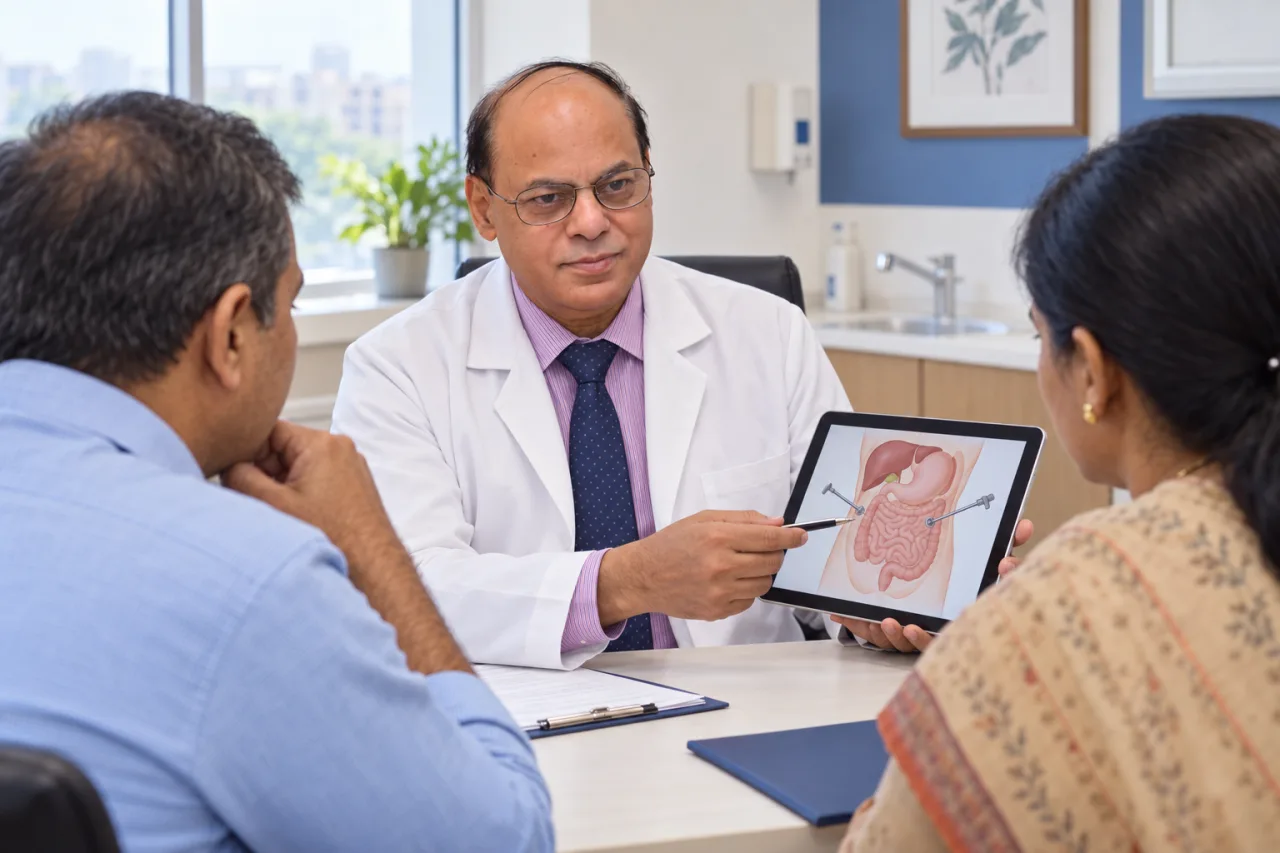
Laparoscopic surgery is often called keyhole surgery because the surgeon works through several small incisions rather than one long incision. A camera called a laparoscope gives the surgical team a clear view inside the abdomen or pelvis. The approach is used for many different operations, so your experience will depend on the condition being treated, your overall health and the exact procedure planned.
Feeling uncertain before an operation is normal. Good preparation is not about memorising every medical detail. It is about understanding the plan, sharing accurate health information and arranging the practical support you may need afterwards. Your surgeon and anaesthesia team will give instructions specific to you; those instructions always take priority over general information online.
Start with a clear conversation
At your consultation, ask what the operation is intended to achieve and why a laparoscopic approach is being recommended. It is reasonable to ask about alternatives, expected benefits, important risks and the possibility that the surgeon may need to change to an open operation for safety. You can also ask how long the operation may take, what kind of anaesthesia is planned and whether an overnight stay is likely.
Bring a written list of your medicines, supplements and allergies. Include medicines bought without a prescription and any traditional or herbal preparations. Some medicines can affect bleeding, blood pressure, blood sugar or anaesthesia, but you should not stop any prescribed medicine on your own. The clinical team will tell you exactly what to continue, pause or adjust.
Tell the team about previous operations or anaesthesia problems, heart or lung conditions, diabetes, kidney disease, pregnancy or the possibility of pregnancy, dental issues, recent infections and any tendency to bleed or form clots. If you use tobacco, sharing that information honestly helps the team plan safer care. This is not a test; it is part of creating the right plan for you.
Complete the pre-operative checks
Depending on the procedure and your medical history, the hospital may arrange blood tests, an electrocardiogram, imaging or other assessments. These checks help the team understand your current health and identify issues that may need attention before surgery. Complete them within the advised time and bring earlier reports if requested.
Make sure the hospital has a current phone number and knows whom to contact if the schedule changes. Confirm where and when to arrive, what documents to bring and whether you need to remove jewellery, nail products, contact lenses or dentures. Ask whether any personal medical equipment, such as an inhaler or continuous positive airway pressure device, should come with you.
The hospital will give you individual fasting instructions. Follow the exact times given for food, milk, water and other drinks. Do not use a standard time from a friend or an internet article, because the instruction can vary with your operation and anaesthesia plan. If you accidentally eat or drink after the stated time, tell the team. Hiding it can create an avoidable anaesthesia risk.
Plan the first days at home
You will not be able to drive yourself home after a general anaesthetic. Arrange for a responsible adult to collect you and, if advised, stay with you during the first night. Think ahead about stairs, young children, pets, shopping and work. Place frequently used items within easy reach and prepare simple meals so that you can focus on rest and gentle movement.
Ask the surgeon how long people commonly need away from work for your particular operation. The answer is affected by the type of surgery and whether your work is mainly seated, involves driving or requires lifting. Recovery is not a competition. A realistic plan is usually more helpful than promising an exact return date too early.
Pack only what you need: identification, reports, your medicine list, comfortable loose clothing and essential personal items. Leave valuables at home. If you have questions about admission, payment or insurance documents, resolve them before the day where possible so the clinical conversation can stay focused on your care.
What to expect on the day
Before the operation, members of the team will confirm your identity, procedure, allergies and consent. Repeated checks are a safety practice. This is a good time to mention any change in your health, including fever, cough, vomiting, a new rash or a medicine change. The anaesthetist may explain how you will be monitored and how pain or nausea can be managed.
During laparoscopy, the surgeon usually makes a small incision near the navel, introduces gas to create working space and inserts the camera. Additional small incisions may be used for instruments. At the end, the gas is released as far as possible and the incisions are closed and dressed. The details differ between operations, and your surgeon can explain what applies to yours.
Afterwards, you will spend time in a recovery area while the team monitors breathing, circulation, comfort and alertness. It is common to feel tired or nauseated. Some people notice abdominal bloating or shoulder-tip discomfort caused by the gas used during the procedure. Tell the staff how you feel so they can assess you rather than trying to be stoic.
Support a steady recovery
Your discharge instructions should explain wound care, bathing, activity, food, medicines and follow-up. Keep them where both you and your family can read them. Take only the pain relief and other medicines recommended for you. If an antibiotic is prescribed, use it exactly as directed and ask what to do if you miss a dose or develop a reaction.
Gentle movement is often encouraged because it supports circulation and gradually rebuilds confidence. The amount and pace must match your operation and your surgeon's advice. Avoid strenuous exercise, heavy lifting and driving until the clinical team says it is safe. You should be comfortable, alert and able to perform an emergency stop before considering driving, and your motor insurer may have additional requirements.
Appetite and bowel habits may take time to settle. Follow the dietary advice given for your procedure, drink fluids as advised and choose manageable meals. Do not compare your progress with someone who had a different operation. Recovery can move forward in small steps, with a more tired day in between.
Keep the wounds clean and observe them without repeatedly touching them. Mild bruising can occur, but worsening redness, swelling, heat, discharge or bleeding needs clinical advice. Attend the planned follow-up even if you feel well; it gives the team a chance to review healing, explain findings and answer questions about returning to normal activities.
Know when to seek help
Your discharge sheet should include the correct contact numbers and warning signs for your procedure. Seek urgent medical advice if you develop worsening abdominal pain, persistent vomiting, fever or chills, increasing abdominal swelling, unusual bleeding, pus or spreading redness around a wound, pain or swelling in one leg, or if you feel suddenly much worse.
Chest pain, coughing blood, fainting, a very fast heartbeat or serious difficulty breathing can be emergency symptoms. Use local emergency services rather than waiting for a routine appointment. When you call, say that you have recently had surgery and describe when the symptoms began.
A short checklist before you leave home
- I understand which procedure is planned and whom to call with questions.
- The team has an accurate list of my medicines, supplements and allergies.
- I have followed my personal medicine and fasting instructions.
- My tests and requested reports are complete.
- A responsible adult will take me home and provide the advised support.
- I know the expected follow-up plan and urgent warning signs.
Preparation can make the day feel less overwhelming, but it cannot remove every uncertainty. Write down your questions and bring them to your consultation. The best plan is the one created with the surgical and anaesthesia teams who know your condition and can adapt guidance to your needs.
Sources and further reading
Reviewed against official guidance available on the publication date.